
Medically reviewed by Dr. Mac Maxwell, DACVS — board-certified veterinary surgeon. Last reviewed: June 2026
Quick Facts: Brachycephalic Obstructive Airway Syndrome (BOAS)
- What it is: A breathing disorder in flat-faced (brachycephalic) dogs caused by anatomical features that obstruct airflow.
- Most affected: Short-nosed breeds, including Bulldogs, Pugs, and Boston Terriers.
- What's involved: A combination of narrowed nostrils (stenotic nares), an elongated soft palate, everted laryngeal saccules, and, in severe cases, laryngeal collapse.
- Common signs: Noisy breathing or snoring, frequent panting, exercise intolerance, gagging, and trouble eating; collapse in severe cases.
- Treatment: Surgical correction of the abnormalities (widening the nostrils, shortening the soft palate, removing everted saccules), plus weight and environment management.
- Best outcome: Early treatment, before secondary changes like laryngeal collapse develop, gives the best results.
If your flat-faced dog snores loudly, tires quickly on walks, or struggles to breathe in the heat, the cause may be Brachycephalic Obstructive Airway Syndrome (BOAS). This guide explains what BOAS is, the signs to watch for, how it’s diagnosed, and how surgery corrects it. At Apex Veterinary Surgery, our board-certified (DACVS) surgeons evaluate and treat BOAS for dogs across Nashville and Memphis.
What Is Brachycephalic Obstructive Airway Syndrome?
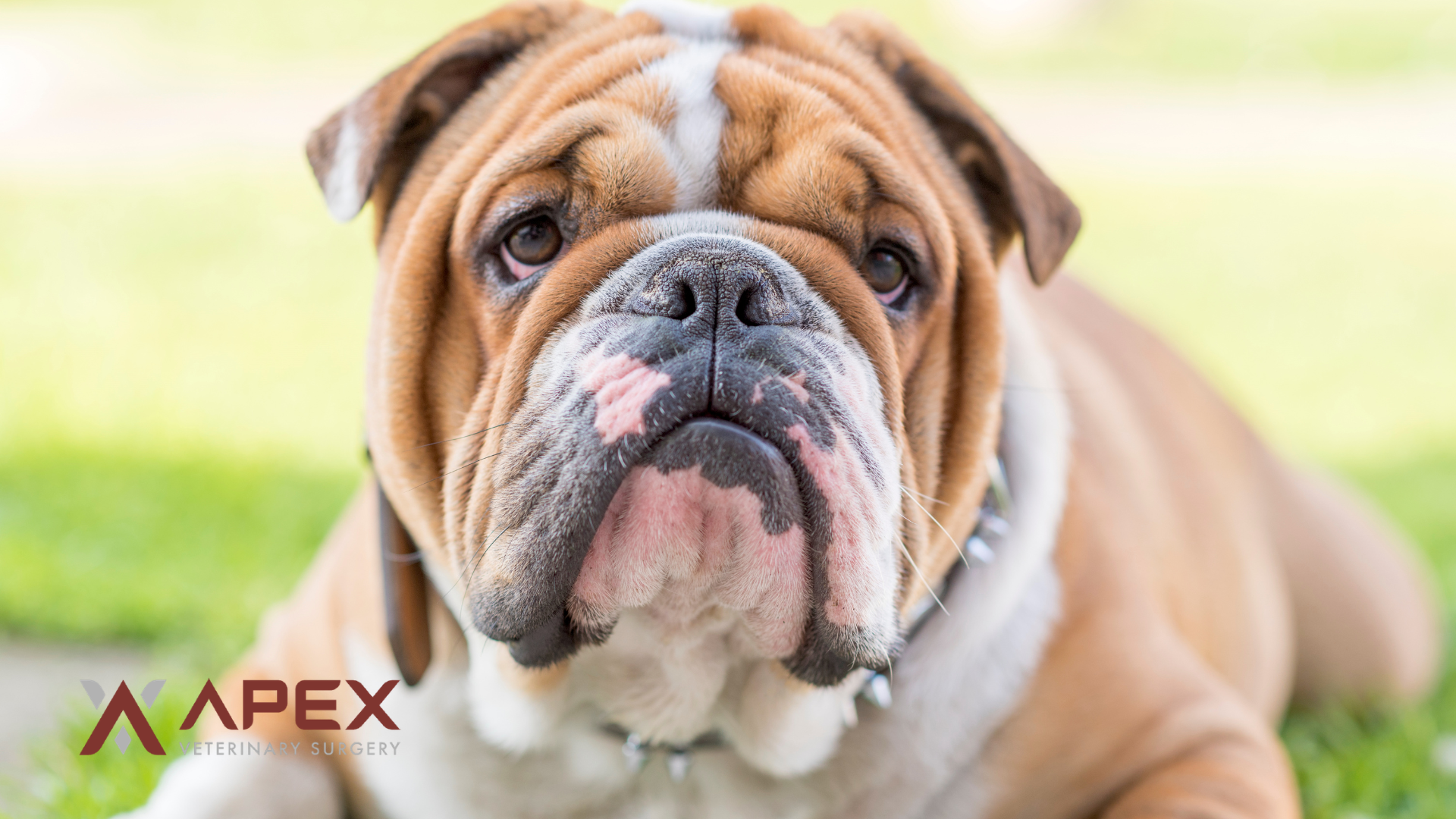
Brachycephalic Obstructive Airway Syndrome (BOAS) is a common respiratory condition affecting certain breeds of dogs, characterized by anatomical abnormalities that make breathing difficult. Brachycephalic dogs are breeds with “short noses,” such as Bulldogs, Pugs, and Boston Terriers. The short muzzle and flattened face contribute to a host of breathing difficulties collectively known as BOAS. Components of BOAS typically include combinations of the following:
- Stenotic nares: Narrowed nostrils restrict airflow into the nasal passages.
- Elongated soft palate: A long soft palate can obstruct air movement into the larynx and trachea.
- Everted laryngeal saccules: Swollen tissue near the vocal cords can also limit airflow.
- Laryngeal collapse: In more severe cases, the larynx can collapse in on itself, further restricting airflow.
- Hypoplastic trachea: Present in some cases, this involves an abnormally small trachea.
- Redundant nasal turbinates: When present, these can protrude into the nasopharynx and further restrict airflow through the nose.
What Are the Signs of BOAS?
Clinical signs vary depending on severity, but typically include a combination of the following:
- Noisy breathing or snoring, which may only be noted during exercise in mild cases
- Frequent panting
- Exercise intolerance
- Difficulty eating or swallowing
- Cyanosis (bluish discoloration of the tongue and gums)
- Gagging
- Collapse in severe cases
Secondary clinical signs, such as lower airway disease and gastrointestinal problems, can develop in more chronic cases. The narrowed airways increase resistance, putting additional stress on the respiratory and gastrointestinal systems. Over time, these issues can lead to more severe problems like laryngeal collapse, gastroesophageal reflux, hiatal hernias, and pyloric stenosis.
If your pet displays any of the clinical signs mentioned above, consult your veterinarian promptly. An early diagnosis helps with effective management and can prevent further complications.
How Is BOAS Diagnosed?
Clinical signs often give a strong indication of BOAS, but confirmation typically requires a thorough physical examination and a sedated upper airway examination. Diagnostic tests like thoracic radiography and fluoroscopy can also be beneficial in assessing the respiratory tract.
How Is BOAS Treated?
The most effective treatment for BOAS is surgical correction of the anatomical abnormalities that can be corrected. These typically include:
- Alar fold resection to widen the nostrils and increase airflow into the nose
- Staphylectomy to shorten the soft palate and prevent occlusion of the larynx
- Laryngeal sacculectomy as needed to widen the laryngeal opening
- In more severe cases, treatment of laryngeal collapse may be necessary
Supportive Care
Supportive care usually involves:
- Weight control: Obesity greatly exacerbates BOAS symptoms.
- Environmental management: Avoid heat and excessive exercise to decrease panting.
- Sedatives may be used as needed to decrease stress.
- Harness instead of a collar to decrease pressure on the neck and airways.
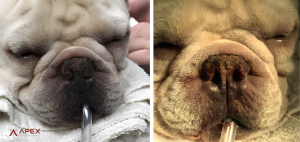
Before (left) and after (right): a brachycephalic dog’s narrowed nostrils (stenotic nares) widened through alar fold resection to improve airflow.
After Surgery
Postoperative care usually involves close monitoring for the first 24 hours after surgery to watch for signs of breathing difficulty from surgical-site swelling.
In some cases, swelling can be severe and necessitate emergency intervention to bypass the airway (less than 5% of cases require a temporary tracheostomy). It should be noted that Brachycephalic patients have very narrow airways, and it does not take much swelling to cause a significant obstruction. We always cover in detail the potential complications with the owner before surgery.
Possible complications include infection, hemorrhage, upper respiratory swelling, aspiration pneumonia, and the possibility of continued care in oxygen. Dogs with laryngeal collapse are at higher risk of complications, including death. In some severe cases, we recommend that they be done at a 24-hour facility. Patients should be fed only soft food in the postoperative period, and an Elizabethan collar should be maintained until the nares have healed.
When to See a Board-Certified Veterinary Surgeon
Brachycephalic Obstructive Airway Syndrome is a complex condition that can significantly impair a dog’s quality of life and is a constant concern for pet owners and veterinarians alike. Early diagnosis and appropriate treatment are crucial to managing it effectively and improving the quality of life for brachycephalic dogs. Whether you’re a veterinarian or a loving pet owner, staying informed and vigilant is key to a better life for these dogs.
Apex Veterinary Surgery’s board-certified (DACVS) surgeons evaluate and treat BOAS at our Brentwood location in the Nashville metro and our Germantown location in the Memphis metro. We accept referrals from primary care veterinarians and welcome direct inquiries from pet owners.
Frequently Asked Questions
What dog breeds are most affected by BOAS?
BOAS affects brachycephalic (“short-nosed”) breeds. The most commonly affected include Bulldogs, Pugs, and Boston Terriers, though other flat-faced breeds can be affected as well. The short muzzle and flattened face are what drive the breathing difficulty.
Does my flat-faced dog need surgery for BOAS?
Not every brachycephalic dog needs surgery, but dogs showing clinical signs usually benefit from surgical correction of the abnormalities that can be fixed. A board-certified veterinary surgeon evaluates the severity and recommends the right plan. Treating BOAS early, before secondary changes develop, gives the best outcome.
What does BOAS surgery involve?
Surgery corrects the anatomical problems restricting airflow. This commonly includes widening the nostrils (alar fold resection), shortening the soft palate (staphylectomy), and removing everted laryngeal saccules as needed. In more severe cases, laryngeal collapse may also need to be addressed.
What is recovery like after BOAS surgery?
Dogs are monitored closely for the first 24 hours after surgery for any breathing difficulty from surgical-site swelling. At home, dogs are fed soft food during the recovery period and wear an Elizabethan collar until the nostrils have healed.
Can BOAS be managed without surgery?
Supportive care, weight control, avoiding heat and overexertion, and using a harness instead of a collar help manage symptoms, but it does not correct the underlying anatomy. For dogs with significant signs, surgery is the most effective treatment.
Why is early treatment important?
Untreated BOAS places ongoing stress on the airway and can progress to more severe problems such as laryngeal collapse, gastroesophageal reflux, and hiatal hernias. Early diagnosis and correction help prevent that progression and protect your dog’s quality of life.
Schedule a Consultation
If you would like to schedule an appointment with Apex Veterinary Surgery to have your pet evaluated for BOAS, we’ll help you find a time that works for your pet’s care.

Dr. Mac Maxwell is a board-certified veterinary surgeon (DACVS) practicing at Apex Veterinary Surgery’s Germantown office in the Memphis metro area. His training began with a DVM from Mississippi State University College of Veterinary Medicine in 2004, followed by a small animal medicine and surgery internship at Colorado State University Veterinary Teaching Hospital. He returned to MSU for a three-year surgical residency and later served there as an assistant professor of small animal surgery. He became a Diplomate of the American College of Veterinary Surgeons in 2009 and earned a Master’s degree in 2010.
Dr. Maxwell has authored and coauthored book chapters in his field and published peer-reviewed scientific research. He has lectured at continuing education meetings across the region.
Selected publications:
– Duration of use of postoperative thoracostomy tubes in canines and felines without preoperative pneumothorax or pleural effusion, Journal of the American Veterinary Medical Association, 2026. https://doi.org/10.2460/javma.25.09.0603
– Effects of incision closure method on infection prevalence following tibial plateau leveling osteotomy in dogs, The Canadian Veterinary Journal, 2015. https://pmc.ncbi.nlm.nih.gov/articles/PMC4357910/
Medically reviews surgical and orthopedic content on the Apex Veterinary Surgery website.